


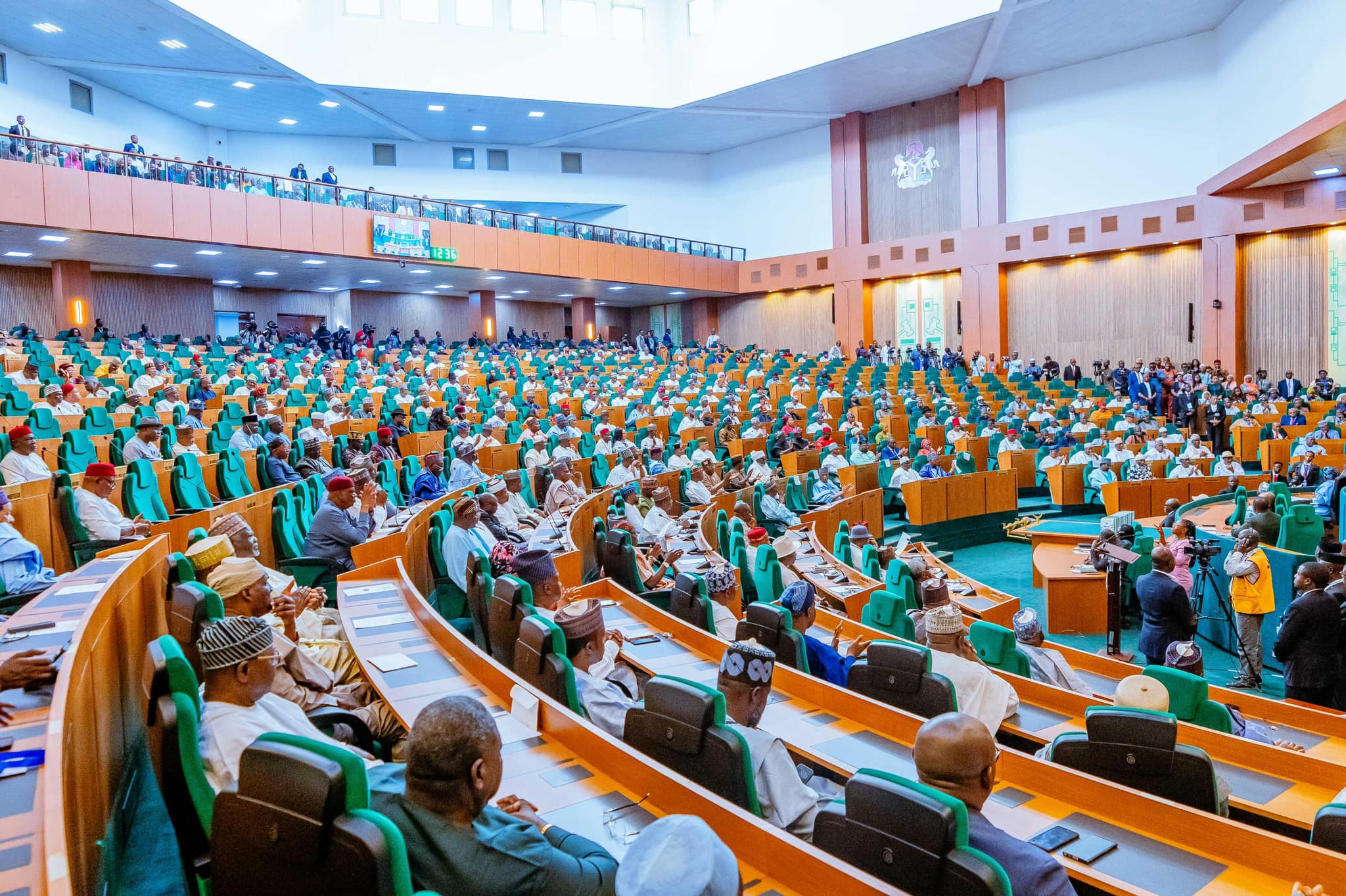
The House of Representatives has taken a major step towards reforming Nigeria’s fast-growing digital monetary sector because it thought-about the invoice to ascertain the Nigerian Fintech Regulatory Fee (NFRC) for the licensing, supervision, and regulation of fintech firms and their enterprise actions in Nigeria.
The proposed laws, sponsored by Fuad Laguda (APC, Lagos), scaled second studying throughout Tuesday’s plenary.
Main the controversy on the overall ideas of the invoice, Mr Laguda stated the laws seeks to create a statutory physique liable for the licensing, supervision, and regulation of Monetary Expertise (Fintech) firms and repair suppliers in Nigeria, a transfer he described as “lengthy overdue.”
In keeping with him, the NFRC will function a government to control, coordinate, and standardise the operations of fintech companies presently working below a number of regulatory our bodies.
“At present, Nigeria has no single regulatory authority regulating companies, practices, and operations of Fintech Operators and Service Suppliers regardless of their contributions to nationwide development and growth,” he stated.
He cited knowledge from the African Growth Financial institution, Statista, and Monetary Instances, noting that between 2020 and 2021, the Nigerian fintech business raised over $500 million throughout greater than 103 registered startups.
The determine rose to $800 million by September 2021, and by 2024, the sector had attracted over $2.2 billion in investments, underscoring the pressing want for devoted oversight and safety.
Mr Laguda defined that the fintech business is presently regulated by a variety of companies together with the Central Financial institution of Nigeria (CBN), Nigerian Deposit Insurance coverage Company (NDIC), Nigerian Communications Fee (NCC), Securities and Change Fee (SEC), Nationwide Info Expertise Growth Company (NITDA), Nationwide Insurance coverage Fee (NAICOM), Company Affairs Fee (CAC), Federal Inland Income Service (FIRS), Nigeria Knowledge Safety Fee (NDPC), and the Nationwide Workplace for Expertise Acquisition and Promotion (NOTAP).
Nonetheless, he argued that this “regulatory overlap” has created operational confusion and inefficiency, leaving fintech operators with out a unified framework or commonplace for compliance.
At present, he added, the one recognised physique coordinating fintech actions is the Fintech Affiliation of Nigeria, a private-sector initiative with out statutory powers.
“This Invoice seeks to ascertain the Nigerian Fintech Regulatory Fee to ascertain requirements, guidelines, and codes of practices for Fintech operators in Nigeria,” Mr Laguda stated.
Addressing cyber threats and monetary crimes
The lawmaker additionally expressed concern over the rising incidents of cyberattacks, hacking, and on-line fraud which have plagued fintech firms equivalent to Opay, PalmPay, Moniepoint, and Paystack between 2020 and 2024.
He stated these challenges might have been mitigated if Nigeria had an impartial regulatory authority devoted to fintech threat administration, knowledge safety, and cybersecurity coordination.
He additional famous that the invoice aligns with President Bola Tinubu’s Renewed Hope Agenda, significantly its concentrate on selling ease of doing enterprise, digital inclusion, and regulatory reform within the monetary know-how ecosystem.
Mr Laguda stated the fee would additionally present impartial opinions of fintech efficiency, improve transparency and accountability, and guarantee compliance with monetary and knowledge safety legal guidelines.
READ ALSO: Nigeria nears diaspora voting as Reps, NiDCOM launch digital response system
“This invoice goals to help the federal authorities’s efforts to mitigate digital fraudsters, unethical hack, and web marauders who’re negatively disrupting company efficiency, monetary actions, and enterprise operations of fintech operators and repair suppliers in Nigeria,” he stated.
Subsequent steps
The invoice was instantly adopted with out debate and the Speaker of the Home, Abbas Tajudeen who presided over the plenary referred it to the Home Committees on Banking Rules; Digital and Digital Banking; Science and Expertise; and Communications for additional legislative scrutiny and enter earlier than being offered for a 3rd studying.
If handed into regulation, the Nigerian Fintech Regulatory Fee will grow to be the nation’s first impartial company solely liable for overseeing the fintech ecosystem, a serious coverage shift within the regulation of Nigeria’s burgeoning digital monetary providers business.
