


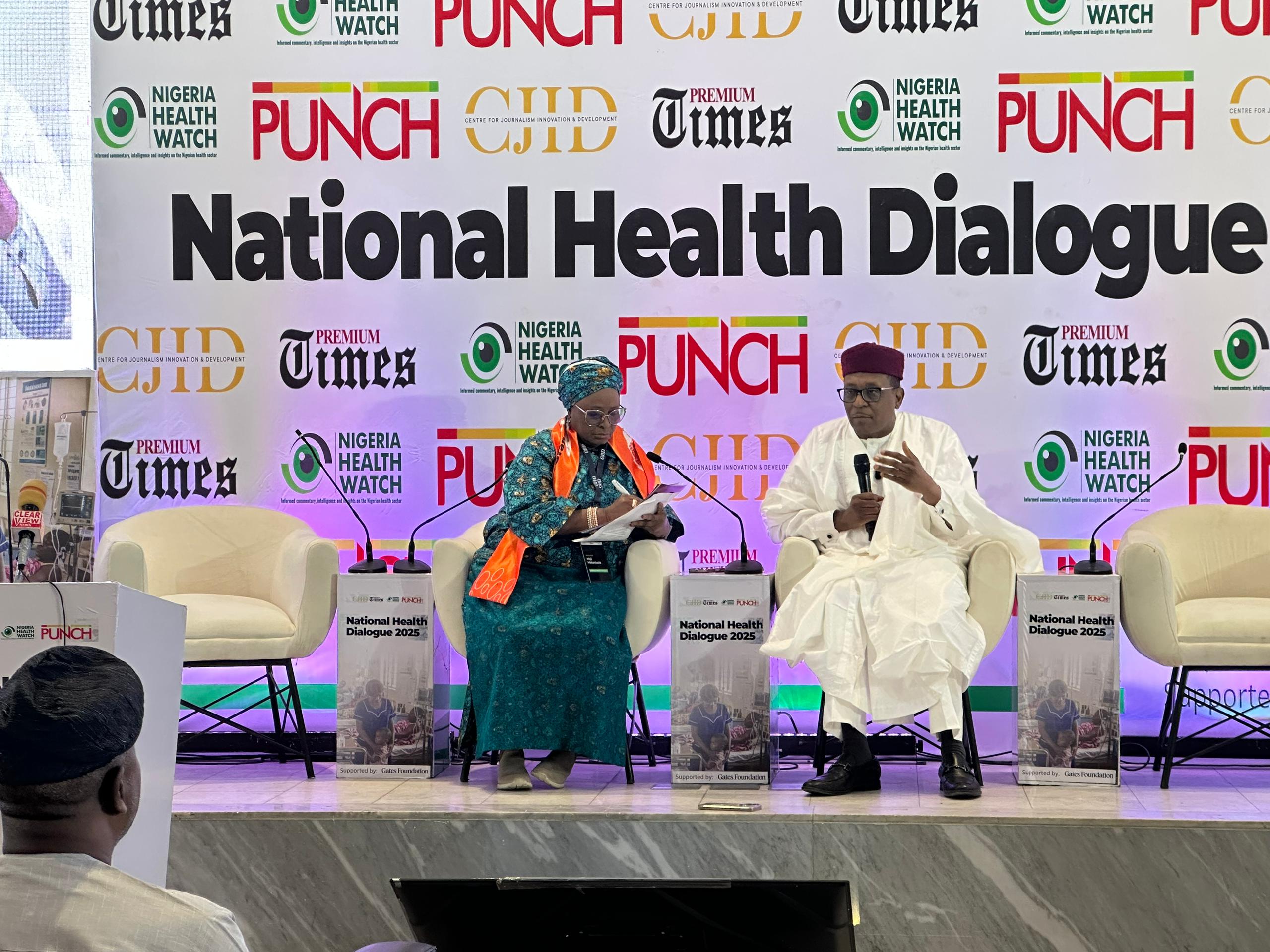
High officers from the Nigerian Ministry of Well being and its companies have pledged to pursue evidence-driven reforms, promote innovation, and strengthen financing to enhance healthcare service supply nationwide.
The dedication was made on Thursday through the Nationwide Well being Dialogue held at Fraser Suites, Abuja, which introduced collectively policymakers, well being innovators, journalists, and civil society representatives.

Organised by PREMIUM TIMES in partnership with the Centre for Journalism Innovation and Development (CJID), the occasion was themed “Proof, Innovation, and Financing for a More healthy Nigeria.”
The dialogue explored gaps within the nation’s well being system, superior accountability, and sought sensible options to reinforce public well being outcomes.
The discussion board offered a platform for presidency officers, international well being leaders, journalists, civil society actors, and innovators to debate challenges and determine evidence-based, progressive methods for strengthening Nigeria’s healthcare system.
In his submission, Nigeria’s Minister of Well being and Social Welfare, Muhammad Pate, stated the federal authorities is pushing for the very best well being allocation in Nigeria’s historical past, ending wasteful spending practices and strengthening accountability throughout the system.


Mr Pate stated he expects Nigeria’s 2026 funds to maneuver nearer to a six per cent well being allocation, “the very best ever” in federal spending.
The minister stated the ministry has ended decades-old spending patterns wherein a lot of the well being funds went to workshops, conferences and administrative actions.
“In 2023, 61 per cent of the Excel funding went to coverage and monitoring workshops. This yr… 91 per cent goes on to service supply,” he stated.
The minister confused the necessity for extra environment friendly spending, with better emphasis on main healthcare, hospitals, most cancers care, intensive care, and affordability.
Earlier, in his keynote deal with, the Govt Director of the Nationwide Main Well being Care Improvement Company (NPHCDA), Muyi Aina, stated proof, innovation, and satisfactory financing are important for bettering well being service supply nationwide.
“Over the previous two years, the federal government has accomplished greater than 2,000 extra main healthcare amenities, many absolutely geared up and staffed. Greater than 70,000 well being staff have been skilled in the identical interval, whereas main healthcare centres have recorded between 46 and 47 million service visits.”
“Maternal and baby well being stays a spotlight, with thousands and thousands of pregnant ladies now being adopted by the system, and antenatal care attendance rising by 22.5 per cent,” Mr Aina stated.
He additionally highlighted improvements comparable to digital monitoring methods, digitised monetary administration, and improved connectivity for vaccination campaigns, all geared toward bettering accountability and repair effectivity.
Mr Aina confused the necessity for deeper collaboration with state governments, civil society, and the media to strengthen accountability, broaden entry, and construct group belief within the main healthcare system.
NACA Reaffirms Dedication to HIV Response
In her goodwill message, the Director-Basic of the Nationwide Company for the Management of AIDS (NACA), Temitope Ilori, recommended PREMIUM TIMES and CJID for offering a platform to deepen accountability in well being reporting.
She highlighted the intersection of journalism, public well being, and nationwide improvement, noting that high quality reportage shapes coverage, strengthens public belief, and saves lives.
Mrs Ilori reaffirmed NACA’s dedication to sustaining positive aspects within the HIV response by evidence-driven coordination, strengthened partnerships, and a concentrate on prevention and remedy.
She described the dialogue as a well timed alternative to replicate on progress, deal with persistent bottlenecks, and chart pathways towards a people-centred well being system.
“Return to practical main well being care”
The WHO Nation Consultant to Nigeria, Pavel Ursu, represented by Taiwo Hamzat of the organisation’s Provide Chain Administration unit, described Nigeria as being at a pivotal second in health-sector reform.
Whereas routine immunisation protection has improved from 5 per cent in 2013 to 39 per cent in 2024, inefficiency, inequity, and weak accountability proceed to sluggish progress, he stated.
Mr Ursu confused that significant transformation should start on the group stage, recalling that main healthcare was the one level of contact for many households throughout his childhood in a rural group. He urged a “return to the times when main well being care labored for each Nigerian household.”
READ ALSO: Minister highlights challenges, progress, options in Nigeria’s well being sector
He known as for constant insurance policies, stronger accountability frameworks, and credible information to information planning and budgeting. He stated the WHO is supporting Nigeria to strengthen digital well being regulation, community-led improvements, and information methods that inform evidence-driven choices.
Mr Ursu additionally highlighted the urgency of sustainable well being financing. With out-of-pocket funds accounting for 71 per cent of well being spending, thousands and thousands stay susceptible to monetary hardship, he stated.
.Though enrolment within the Nationwide Well being Insurance coverage Authority grew from 16.7 million in 2023 to 19.2 million in 2024, he stated the federal government should do extra to fulfill its 2025 goal of 44 million insured Nigerians.
He known as for significant youth engagement and gender fairness, noting that 63 per cent of the inhabitants is below 25. Younger individuals should be central to designing and monitoring well being insurance policies, whereas ladies deserve equitable entry to providers and management alternatives, he stated.
Individuals emphasised that Nigeria stands at an important level in well being reform. Whereas positive aspects have been made in immunisation protection, main healthcare and workforce coaching, inefficiencies, inequities, and weak accountability stay challenges.
On the occasion, different well being consultants reiterated the necessity for sustainable financing, stronger coverage consistency, gender fairness, and youth engagement.
In addition they known as for collaboration between governments, civil society, media, and communities to make sure that reforms are sensible, evidence-based, and inclusive.
The dialogue bolstered that proof, innovation, and correct finance are key to attaining a extra people-centred, equitable, and environment friendly well being system in Nigeria.
